Download our brochure Download our app
0 Items £0.00
Book Consultation
profhilo rayleigh

Blog

Perimenopause and Your Skin: What Changes and Which Treatments Help

26-09-2026 | Posted in: Blogs
Vicky Grammatikopoulou, BHons, MA, PGCE

Article by

Vicky Grammatikopoulou, BHons, MA, PGCE

Vicky Grammatikopoulou is the founder and CEO of Vie Aesthetics, a multi-award winning UK-based aesthetics business built on a philosophy of safety, excellence, education, innovation, and empowerment.

The right perimenopause skin changes treatment depends on what has changed and whether hormones are involved. Skin concerns can have other causes, too, so a considered perimenopause skin changes treatment approach begins with understanding your individual concern rather than assuming you need a procedure.

If your skin feels different, it’s understandable to look for clear answers amid conflicting online advice. This guide explains why changes may happen, which options could be worth discussing and how to assess whether a recommendation feels appropriate for you.

You’ll also learn when a skin concern may need medical advice, and how face treatment options differ from support for wider menopause questions, including menopause services.

Key Takeaways

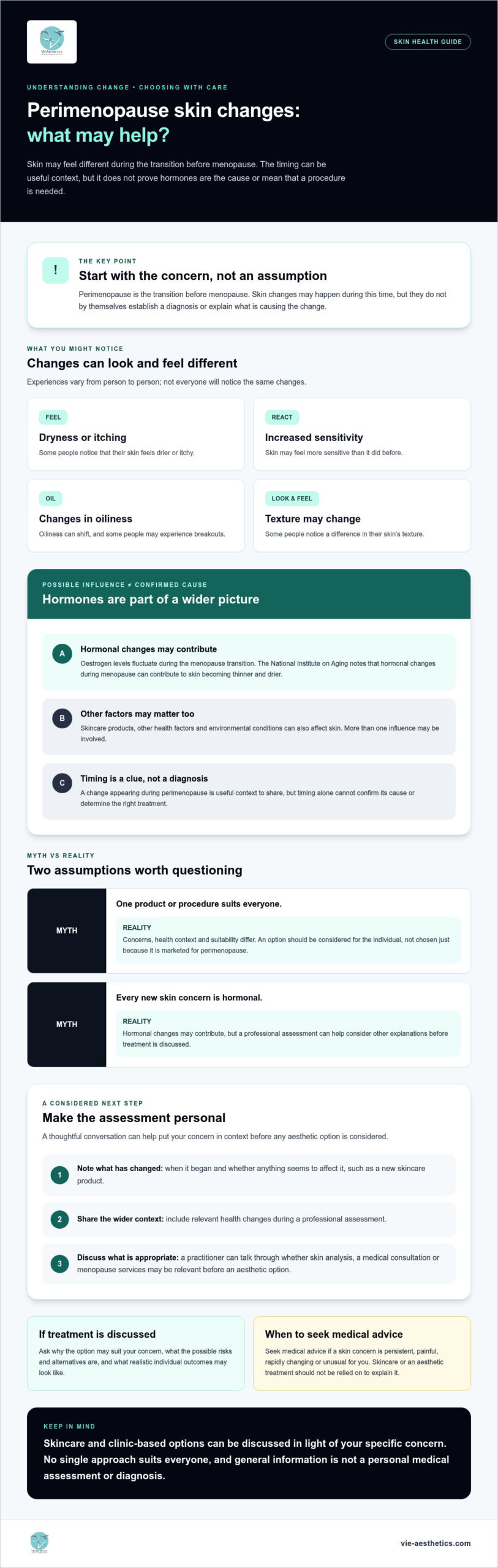
  • Perimenopause is the transition before menopause, and skin changes during this time don’t by themselves establish a diagnosis or cause.
  • Dryness, sensitivity, changes in oiliness and texture may occur, but experiences differ from person to person.
  • Skincare and clinic-based options can be discussed in light of your specific concern; no single approach suits everyone.
  • Before considering a procedure, ask a qualified practitioner about their recommendation, possible risks, alternatives and realistic individual outcomes.

What perimenopause skin changes can happen, and why might they matter?

It’s understandable if your skin feels different during perimenopause. This is the transition before menopause, when menstrual cycles may change and hormone levels fluctuate; possible skin changes can occur during this time, but they don’t confirm that hormones are the cause. The right perimenopause skin changes treatment starts with understanding the concern, not assuming its source.

To hear another perspective on skin changes during this life stage, watch this video:

Which skin concerns might change during perimenopause?

Some people notice dryness, itching or increased sensitivity; others experience changes in oiliness, breakouts or skin texture. These experiences vary. A concise way to describe perimenopause-related skin changes is: skin concerns that appear or shift during the hormonal transition, without that timing alone proving a hormonal cause.

The Menopause overview describes skin thinning and dryness among changes associated with menopause. If symptoms are persistent, painful, rapidly changing or unusual for you, seek medical advice rather than relying on skincare or an aesthetic treatment to explain them.

How can I tell whether hormones are the cause?

Timing offers a clue, not a diagnosis. Hormonal fluctuations may coincide with changes in dryness or oiliness, but skin can also be affected by skincare products, other health factors and environmental conditions. More than one influence may be involved.

Keep a brief note of what has changed, when it began and whether anything seems to affect it, such as a new skincare product. Share this context, alongside relevant health changes, during a professional assessment. A practitioner can discuss whether skin analysis, a medical consultation or menopause services may be appropriate before considering any aesthetic option. You can also review the clinic’s face treatment options, while remembering that suitability needs individual assessment.
Perimenopause and Your Skin: What Changes and Which Treatments Help

How hormonal changes may affect skin, and what perimenopause myths miss

Hormones can be part of the picture, but they don’t explain every skin change. Oestrogen, a hormone whose levels fluctuate during the menopause transition, is one factor to consider. The National Institute on Aging notes that hormonal changes during menopause can contribute to skin becoming thinner and drier. This describes a possible association, not proof of what is causing an individual concern.

Skin responds to more than hormones, and changes may have several influences. A new concern appearing during perimenopause is useful context to share with a practitioner, but timing alone can’t establish a cause or identify the right perimenopause skin changes treatment.

Here’s a simple way to think about the relationship:

Hormonal changes may be one influence on skin.

Possible changes include skin that feels thinner or drier, as described by the National Institute on Aging.

Personal assessment helps explore whether hormones, another factor or a combination could be relevant.

Myth vs Reality: is there one treatment for perimenopause skin?

  • Myth: One skincare product or procedure suits everyone. Reality: Concerns, health context and suitability differ, so an option should be considered individually rather than chosen because it is marketed for perimenopause.
  • Myth: Every new skin concern is hormonal. Reality: Hormonal changes may contribute, but a professional assessment can help consider other explanations before discussing treatment.

General information can help you prepare questions, but it isn’t a personal medical assessment or diagnosis. Be cautious of claims that a product or procedure is essential for everyone in perimenopause. A qualified practitioner should explain why an option may suit your concern, as well as relevant risks and alternatives.

If you’d like to discuss skin changes alongside wider menopause-related questions, you can explore menopause services or arrange a consultation to talk through your individual needs.

Which treatments may help perimenopause skin changes?

The most useful starting point is the concern you want addressed, not the assumption that one option is designed for perimenopause. A considered perimenopause skin changes treatment plan may begin with simple skincare, a professional assessment, or both. Neither should be presented as a cure for every skin change.

Use the comparison below as a guide to what you might discuss, rather than as a recommendation. A practitioner should explain the reasoning, suitability, risks and alternatives before you decide.

Approach Possible purpose What requires clinician confirmation
Supportive skincare Help you maintain a consistent routine suited to your skin’s current needs. Which products and ingredients suit your skin, particularly if it feels sensitive or reacts to products.
Skin analysis or medical consultation Explore your concern and whether further assessment or an aesthetic option may be appropriate. What the assessment can establish and whether a separate medical review is needed.
Skin boosters A clinic-based option to discuss if your concern and circumstances make it relevant. Suitability, expected individual outcomes, risks and alternatives.

What a skin treatment WILL and WON’T do

An appropriate treatment may address a specific concern identified during assessment, subject to a qualified practitioner’s advice. It won’t reverse perimenopause or necessarily address every change in your skin. Outcomes vary between individuals, so ask what is realistic for your priorities before consenting.

Could skincare, skin boosters or other clinic options be considered?

Start with skincare that feels manageable and appropriate for you. If you’re considering a clinic option, suitability depends on the concern, your medical history and an assessment by a qualified practitioner. At Vie Aesthetics, aesthetic procedures are performed by doctors and qualified medical practitioners; options such as skin booster treatments are examples to discuss, not proven perimenopause-specific solutions.

For wider questions about menopause, menopause services may offer a separate route for discussion. A skin assessment or medical consultation can help you understand your options before making a decision.

Book a personalised skin assessment

How to choose a safe, personalised treatment plan for perimenopause skin

A safe choice begins with a clear understanding of what you’ve noticed and what you hope to address. A perimenopause skin changes treatment plan should be guided by your individual concern, relevant health information and a qualified practitioner’s assessment, not by pressure to book a particular procedure. Doctor-led centres such as Yoyime Clinic illustrate how dermatology, aesthetic and wellness assessments can be combined to provide patients with balanced, professional guidance.

What should I prepare before a skin consultation?

Before your appointment, jot down when the change began, what it looks or feels like, and whether it has changed over time. Note any skincare products you’ve tried and how your skin responded. Bringing a list of your current skincare and relevant health information can help make the discussion more useful.

Share what feels relevant to your concern, and ask if you’re unsure what information is needed. If a symptom is persistent, painful, unusual or changing quickly, seek advice from an appropriate healthcare professional rather than assuming it is perimenopause-related or seeking an aesthetic procedure first.

How can I assess whether a treatment recommendation is right for me?

Ask the practitioner to explain the recommendation in straightforward terms. Before deciding, you should understand:

  • What specific concern is the option intended to address, and why might it suit you?
  • What benefits might be possible for you, and what remains uncertain?
  • What are the risks, alternatives and relevant aftercare?
  • Who will perform the procedure, and are they a doctor or qualified medical practitioner?

You can take time to consider the answers. A recommendation should make sense in light of your needs, and you shouldn’t feel obliged to proceed. At Vie Aesthetics, aesthetic procedures are performed by doctors and qualified medical practitioners, with plans personalised to the individual. The guide to non-surgical aesthetic treatments can help you learn about the broader range of options. Menopause services are a separate route for wider menopause-related questions.

After any agreed treatment, ask what follow-up is appropriate and whom to contact if you have concerns. Outcomes vary, so discuss realistic expectations for your own circumstances rather than relying on another person’s experience.

Arrange a consultation

Take your next step with confidence

Your skin may change during perimenopause, but timing alone can’t confirm the cause. A measured approach starts with your specific concern, considers other possible influences and explores suitable options without assuming every change needs a procedure.

The right perimenopause skin changes treatment is individual. A professional assessment can help you discuss your skin, understand the reasoning behind any recommendation and weigh its possible benefits, risks and alternatives. If you have a persistent, painful or unusual symptom, seek advice from an appropriate healthcare professional.

At Vie Aesthetics, aesthetic procedures are performed only by doctors and qualified medical practitioners. Personalised plans can draw on medical, aesthetic and wellness services, so you can discuss your needs before deciding what feels right for you.

Book a personalised skin assessment

You deserve clear information and time to make a considered choice. Begin with the questions that matter to you, and take your next step at your own pace.

Frequently Asked Questions

Can perimenopause cause changes in skin texture or dryness?

It may be associated with skin feeling drier or looking different, but that doesn’t confirm the cause for you. The National Institute on Aging notes that hormonal changes around menopause can contribute to thinner, drier skin. If you notice a new change, record when it began and whether it is worsening. Seek medical advice for symptoms that are painful, persistent or unusual.

What treatment may help with perimenopause skin changes?

There isn’t one treatment that suits every person or skin concern. Your options may range from reviewing your skincare routine to discussing a clinic-based approach after an assessment. A useful first step is to name the change you most want advice about, such as dryness or uneven texture. The practitioner can then explain whether an option is relevant, rather than treating perimenopause itself.

Is a skin booster suitable for perimenopausal skin?

It may be considered, but perimenopause alone doesn’t establish that a skin booster is suitable. Vie Aesthetics offers skin boosters, and a qualified practitioner can assess your concern and relevant health information before discussing one. Ask what the treatment is intended to address, what risks and alternatives apply, and what outcome is realistic for you. Suitability and results are individual.

Should I speak to a GP or an aesthetic practitioner about a new skin concern?

Speak to a GP or another appropriate healthcare professional first if a skin change is painful, persistent, unusual or rapidly worsening. An aesthetic practitioner can discuss cosmetic options, but that discussion isn’t a substitute for medical advice when a symptom may need assessment. If you are seeking personalised medical advice and hormone support, private general practice services such as drnancyallen.com offer dedicated menopause care. For a consultation, note when the change appeared and bring your current skincare list, so the practitioner has specific context.

Can skincare alone help with skin changes during perimenopause?

A skincare routine may support your skin, but it won’t necessarily address every change or its cause. Keep a list of the products you use and note any that seem to cause irritation or discomfort. This gives a practitioner concrete information to consider if you seek advice. If a concern continues despite routine changes, consider discussing it with an appropriate healthcare professional.

How do I choose a safe treatment for perimenopause skin changes?

Before agreeing to a procedure, ask who will perform it, what concern it is intended to address, and what risks, alternatives and aftercare apply. Vie Aesthetics states that aesthetic procedures are performed only by doctors and qualified medical practitioners. Ask for an explanation of realistic outcomes for your circumstances, and take time to consider the information before deciding whether to proceed.


Perimenopause and Your Skin: What Changes and Which Treatments Help

Vicky Grammatikopoulou, BHons, MA, PGCE

Article by

Vicky Grammatikopoulou, BHons, MA, PGCE

Vicky Grammatikopoulou is the founder and CEO of Vie Aesthetics, a multi-award winning UK-based aesthetics business built on a philosophy of safety, excellence, education, innovation, and empowerment.

The right perimenopause skin changes treatment depends on what has changed and whether hormones are involved. Skin concerns can have other causes, too, so a considered perimenopause skin changes treatment approach begins with understanding your individual concern rather than assuming you need a procedure.

If your skin feels different, it’s understandable to look for clear answers amid conflicting online advice. This guide explains why changes may happen, which options could be worth discussing and how to assess whether a recommendation feels appropriate for you.

You’ll also learn when a skin concern may need medical advice, and how face treatment options differ from support for wider menopause questions, including menopause services.

Key Takeaways

  • Perimenopause is the transition before menopause, and skin changes during this time don’t by themselves establish a diagnosis or cause.
  • Dryness, sensitivity, changes in oiliness and texture may occur, but experiences differ from person to person.
  • Skincare and clinic-based options can be discussed in light of your specific concern; no single approach suits everyone.
  • Before considering a procedure, ask a qualified practitioner about their recommendation, possible risks, alternatives and realistic individual outcomes.

What perimenopause skin changes can happen, and why might they matter?

It’s understandable if your skin feels different during perimenopause. This is the transition before menopause, when menstrual cycles may change and hormone levels fluctuate; possible skin changes can occur during this time, but they don’t confirm that hormones are the cause. The right perimenopause skin changes treatment starts with understanding the concern, not assuming its source.

To hear another perspective on skin changes during this life stage, watch this video:

Which skin concerns might change during perimenopause?

Some people notice dryness, itching or increased sensitivity; others experience changes in oiliness, breakouts or skin texture. These experiences vary. A concise way to describe perimenopause-related skin changes is: skin concerns that appear or shift during the hormonal transition, without that timing alone proving a hormonal cause.

The Menopause overview describes skin thinning and dryness among changes associated with menopause. If symptoms are persistent, painful, rapidly changing or unusual for you, seek medical advice rather than relying on skincare or an aesthetic treatment to explain them.

How can I tell whether hormones are the cause?

Timing offers a clue, not a diagnosis. Hormonal fluctuations may coincide with changes in dryness or oiliness, but skin can also be affected by skincare products, other health factors and environmental conditions. More than one influence may be involved.

Keep a brief note of what has changed, when it began and whether anything seems to affect it, such as a new skincare product. Share this context, alongside relevant health changes, during a professional assessment. A practitioner can discuss whether skin analysis, a medical consultation or menopause services may be appropriate before considering any aesthetic option. You can also review the clinic’s face treatment options, while remembering that suitability needs individual assessment.

How hormonal changes may affect skin, and what perimenopause myths miss

Hormones can be part of the picture, but they don’t explain every skin change. Oestrogen, a hormone whose levels fluctuate during the menopause transition, is one factor to consider. The National Institute on Aging notes that hormonal changes during menopause can contribute to skin becoming thinner and drier. This describes a possible association, not proof of what is causing an individual concern.

Skin responds to more than hormones, and changes may have several influences. A new concern appearing during perimenopause is useful context to share with a practitioner, but timing alone can’t establish a cause or identify the right perimenopause skin changes treatment.

Here’s a simple way to think about the relationship:

Hormonal changes may be one influence on skin.

Possible changes include skin that feels thinner or drier, as described by the National Institute on Aging.

Personal assessment helps explore whether hormones, another factor or a combination could be relevant.

Myth vs Reality: is there one treatment for perimenopause skin?

  • Myth: One skincare product or procedure suits everyone. Reality: Concerns, health context and suitability differ, so an option should be considered individually rather than chosen because it is marketed for perimenopause.
  • Myth: Every new skin concern is hormonal. Reality: Hormonal changes may contribute, but a professional assessment can help consider other explanations before discussing treatment.

General information can help you prepare questions, but it isn’t a personal medical assessment or diagnosis. Be cautious of claims that a product or procedure is essential for everyone in perimenopause. A qualified practitioner should explain why an option may suit your concern, as well as relevant risks and alternatives.

If you’d like to discuss skin changes alongside wider menopause-related questions, you can explore menopause services or arrange a consultation to talk through your individual needs.

Which treatments may help perimenopause skin changes?

The most useful starting point is the concern you want addressed, not the assumption that one option is designed for perimenopause. A considered perimenopause skin changes treatment plan may begin with simple skincare, a professional assessment, or both. Neither should be presented as a cure for every skin change.

Use the comparison below as a guide to what you might discuss, rather than as a recommendation. A practitioner should explain the reasoning, suitability, risks and alternatives before you decide.

Approach Possible purpose What requires clinician confirmation
Supportive skincare Help you maintain a consistent routine suited to your skin’s current needs. Which products and ingredients suit your skin, particularly if it feels sensitive or reacts to products.
Skin analysis or medical consultation Explore your concern and whether further assessment or an aesthetic option may be appropriate. What the assessment can establish and whether a separate medical review is needed.
Skin boosters A clinic-based option to discuss if your concern and circumstances make it relevant. Suitability, expected individual outcomes, risks and alternatives.

What a skin treatment WILL and WON’T do

An appropriate treatment may address a specific concern identified during assessment, subject to a qualified practitioner’s advice. It won’t reverse perimenopause or necessarily address every change in your skin. Outcomes vary between individuals, so ask what is realistic for your priorities before consenting.

Could skincare, skin boosters or other clinic options be considered?

Start with skincare that feels manageable and appropriate for you. If you’re considering a clinic option, suitability depends on the concern, your medical history and an assessment by a qualified practitioner. At Vie Aesthetics, aesthetic procedures are performed by doctors and qualified medical practitioners; options such as skin booster treatments are examples to discuss, not proven perimenopause-specific solutions.

For wider questions about menopause, menopause services may offer a separate route for discussion. A skin assessment or medical consultation can help you understand your options before making a decision.

How to choose a safe, personalised treatment plan for perimenopause skin

A safe choice begins with a clear understanding of what you’ve noticed and what you hope to address. A perimenopause skin changes treatment plan should be guided by your individual concern, relevant health information and a qualified practitioner’s assessment, not by pressure to book a particular procedure.

What should I prepare before a skin consultation?

Before your appointment, jot down when the change began, what it looks or feels like, and whether it has changed over time. Note any skincare products you’ve tried and how your skin responded. Bringing a list of your current skincare and relevant health information can help make the discussion more useful.

Share what feels relevant to your concern, and ask if you’re unsure what information is needed. If a symptom is persistent, painful, unusual or changing quickly, seek advice from an appropriate healthcare professional rather than assuming it is perimenopause-related or seeking an aesthetic procedure first.

How can I assess whether a treatment recommendation is right for me?

Ask the practitioner to explain the recommendation in straightforward terms. Before deciding, you should understand:

  • What specific concern is the option intended to address, and why might it suit you?
  • What benefits might be possible for you, and what remains uncertain?
  • What are the risks, alternatives and relevant aftercare?
  • Who will perform the procedure, and are they a doctor or qualified medical practitioner?

You can take time to consider the answers. A recommendation should make sense in light of your needs, and you shouldn’t feel obliged to proceed. At Vie Aesthetics, aesthetic procedures are performed by doctors and qualified medical practitioners, with plans personalised to the individual. The guide to non-surgical aesthetic treatments can help you learn about the broader range of options. Menopause services are a separate route for wider menopause-related questions.

After any agreed treatment, ask what follow-up is appropriate and whom to contact if you have concerns. Outcomes vary, so discuss realistic expectations for your own circumstances rather than relying on another person’s experience.

Take your next step with confidence

Your skin may change during perimenopause, but timing alone can’t confirm the cause. A measured approach starts with your specific concern, considers other possible influences and explores suitable options without assuming every change needs a procedure.

The right perimenopause skin changes treatment is individual. A professional assessment can help you discuss your skin, understand the reasoning behind any recommendation and weigh its possible benefits, risks and alternatives. If you have a persistent, painful or unusual symptom, seek advice from an appropriate healthcare professional.

At Vie Aesthetics, aesthetic procedures are performed only by doctors and qualified medical practitioners. Personalised plans can draw on medical, aesthetic and wellness services, so you can discuss your needs before deciding what feels right for you.

You deserve clear information and time to make a considered choice. Begin with the questions that matter to you, and take your next step at your own pace.

Frequently Asked Questions

Can perimenopause cause changes in skin texture or dryness?

It may be associated with skin feeling drier or looking different, but that doesn’t confirm the cause for you. The National Institute on Aging notes that hormonal changes around menopause can contribute to thinner, drier skin. If you notice a new change, record when it began and whether it is worsening. Seek medical advice for symptoms that are painful, persistent or unusual.

What treatment may help with perimenopause skin changes?

There isn’t one treatment that suits every person or skin concern. Your options may range from reviewing your skincare routine to discussing a clinic-based approach after an assessment. A useful first step is to name the change you most want advice about, such as dryness or uneven texture. The practitioner can then explain whether an option is relevant, rather than treating perimenopause itself.

Is a skin booster suitable for perimenopausal skin?

It may be considered, but perimenopause alone doesn’t establish that a skin booster is suitable. Vie Aesthetics offers skin boosters, and a qualified practitioner can assess your concern and relevant health information before discussing one. Ask what the treatment is intended to address, what risks and alternatives apply, and what outcome is realistic for you. Suitability and results are individual.

Should I speak to a GP or an aesthetic practitioner about a new skin concern?

Speak to a GP or another appropriate healthcare professional first if a skin change is painful, persistent, unusual or rapidly worsening. An aesthetic practitioner can discuss cosmetic options, but that discussion isn’t a substitute for medical advice when a symptom may need assessment. For a consultation, note when the change appeared and bring your current skincare list, so the practitioner has specific context.

Can skincare alone help with skin changes during perimenopause?

A skincare routine may support your skin, but it won’t necessarily address every change or its cause. Keep a list of the products you use and note any that seem to cause irritation or discomfort. This gives a practitioner concrete information to consider if you seek advice. If a concern continues despite routine changes, consider discussing it with an appropriate healthcare professional.

How do I choose a safe treatment for perimenopause skin changes?

Before agreeing to a procedure, ask who will perform it, what concern it is intended to address, and what risks, alternatives and aftercare apply. Vie Aesthetics states that aesthetic procedures are performed only by doctors and qualified medical practitioners. Ask for an explanation of realistic outcomes for your circumstances, and take time to consider the information before deciding whether to proceed.

Back to our blogs
Have any questions?
Submit Enquiry
Vie Aesthetics Clinics
Holborn

95 Gray’s Inn Rd,
Holborn,
London,
WC1X 8TX

///simply.void.saying

Rayleigh

78 London Hill Road,
Rayleigh,
Essex,
SS6 7HP

///stores.weds.joke

Accreditations

Perimenopause and Your Skin: What Changes and Which Treatments Help