
Article by
Vicky Grammatikopoulou, BHons, MA
Vicky Grammatikopoulou is the founder and CEO of Vie Aesthetics, a multi-award winning UK-based aesthetics business built on a philosophy of safety, excellence, education, innovation, and empowerment.
If you are considering dermal fillers in London or Essex, you may want to know how long the results will last, what lip fillers cost and whether treatment can look natural. Questions about swelling, migration and dissolving deserve equally clear answers.
“Before I recommend filler, I look at facial proportions, movement and any previous treatment. Sometimes the most appropriate plan is to wait, use less or not add filler at all.” – Dr Ioannis Liakas, Medical Director, Vie Aesthetics.
At Vie Aesthetics, our doctors assess your facial structure, previous treatments and what you would like to change before recommending a plan. Our medical team is led by Dr Ioannis Liakas, Medical Director. You can explore the options without deciding in advance that you need filler.
Dermal fillers are injectable materials used to add volume, adjust contours and temporarily soften certain lines. Many facial and lip fillers contain hyaluronic acid, a substance that also occurs naturally in the body. Different products have different properties, suitable treatment areas and expected durations.1
This distinction matters: advice about dissolving hyaluronic acid filler does not apply to every type of dermal filler.
Lip filler results can last from several months to around a year, with some lasting 12–18 months. The duration depends on the product, the amount used and your individual response. Product studies support different timelines, so one estimate cannot apply to everyone.
The fullness immediately after treatment includes swelling. As that settles, your lips may look smaller without the filler having disappeared.
There is also a difference between a result becoming less noticeable and every trace of filler having broken down. A calendar reminder alone should not determine when you have more treatment.
At your lip filler consultation, ask which product your doctor recommends, how long its effects may last and how they will assess whether further treatment is appropriate.
Vie Aesthetics’ main price list currently lists 1 ml of dermal filler, including treatment for lips, at £295. Your final quote depends on the agreed treatment plan. The published list also states a £50 booking fee, deducted from the treatment or product cost. Check the current prices and booking terms before arranging your appointment.
One millilitre is a pricing reference, not a recommendation for every pair of lips. Ask about the amount appropriate for your anatomy and the available options.
When comparing lip filler costs in London or Essex, ask what the fee includes: the consultation, product, treatment, review and support if you develop a problem. You should also know who will treat you and what experience they have managing complications.
Filler migration means that filler has moved away from the area where it was originally placed. It differs from filler placed incorrectly at the outset, although the appearance can be similar.
A ridge above the lip border, unexpected fullness or a persistent lump may raise concern. However, these changes do not prove migration. Swelling, superficial placement and inflammatory reactions can also change the appearance or feel of the treated area.
Proposed contributing factors include injection technique, the amount of filler and pressure or movement within the tissues. The evidence does not allow a single cause to be assigned to every case.
A clinician needs to examine the area and review your treatment history. Ultrasound can sometimes help locate filler and distinguish between possible causes; it is not necessary in every case.5
Migrated hyaluronic acid filler can often be dissolved following a medical assessment. Other filler materials do not respond to the same treatment, so identifying the original product is essential.1
A prescribing clinician must decide whether treatment is suitable and explain the risks, alternatives and likely outcome. Some cases need more than one session, and dissolving does not guarantee an exact return to your appearance before treatment.
It can also affect naturally occurring hyaluronic acid temporarily. The extent of correction and the way tissues settle can vary. Your doctor should explain this uncertainty rather than describe dissolving as a guaranteed reset.6
Bring any previous treatment records, including product names and dates. Do not try to dissolve filler yourself or use vigorous massage to move a suspected deposit.
Dissolving filler can cause pain or stinging during the injections, followed by tenderness. The level of discomfort varies, and a clinician may discuss local anaesthetic to help reduce it.
Swelling and bruising can follow. These effects should improve, but the recovery period varies. Do not judge the final appearance immediately after the procedure.7
Dissolving also carries a risk of allergic reactions, including rare severe reactions. Tell your clinician about previous reactions to medicines, bee or wasp stings and any earlier problems with injectable treatments. They will assess what those details mean for your care.6
As temporary hyaluronic acid filler gradually breaks down, the added fullness and contour usually become less noticeable. You do not have to continue treatment if you no longer want it.1
Your face continues to change with age, so no clinician should promise that it will return exactly to an old photograph.
Filler may also remain in the tissues after its visible effect has reduced. A small MRI study found evidence of residual filler several years after treatment in some patients’ mid-face areas. This does not establish how long every filler lasts, and the findings should not be applied directly to lip filler.8
The practical point is to assess what remains before adding more. Comparing your current appearance with photographs taken before treatment can be more useful than assuming that all filler disappears after a set number of months.
Swelling often starts improving within a few days. After lip filler, it may take up to a week to subside, with a review around two weeks helping assess the settled result. Recovery varies with the product, treatment area and individual.3
Early swelling can make lips look larger or uneven. Follow your clinician’s written aftercare instructions, and do not massage or press the area unless they specifically advise it.
Contact your clinician if swelling worsens, returns after settling or lasts longer than they told you to expect. Increasing redness, heat, tenderness or fever also needs prompt assessment. These changes should not simply be dismissed as normal recovery.1
Seek urgent medical assessment for severe or increasing pain, or skin that becomes unusually pale, mottled, blue or grey. Contact your treating clinician immediately; if they are unavailable, seek urgent medical care. A problem with blood supply can occur even without severe pain.9
Call 999 for sudden changes in vision, signs of a stroke or difficulty breathing. Do not wait for a routine review. Rare filler complications include blocked blood vessels, tissue damage and loss of vision.1
You cannot reliably diagnose excessive filler from a photograph or someone’s facial features. In a person who has had treatment, persistent changes in proportion, contour or movement may justify a review.
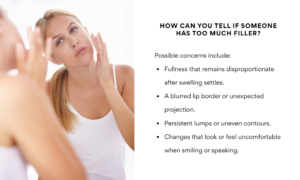
These signs can have other causes. The useful question is whether the result suits your anatomy and agreed goals. An examination and comparison with earlier photographs help your clinician assess that.10
Dermal filler mainly addresses volume and contour. Skin boosters mainly aim to improve skin quality, such as hydration and texture. The right choice depends on the concern you want to address.
For example, reduced lip definition or loss of cheek volume may lead to a discussion about filler. If your main concern is fine surface lines or skin that appears dehydrated, a skin booster may be more relevant.
Many products in both categories contain hyaluronic acid, but their formulations and intended uses differ. They are not interchangeable. Research suggests that some injectable hyaluronic acid treatments can improve hydration and aspects of skin quality, although study quality varies and the findings cannot be extended to every product.11
Vie Aesthetics offers skin booster treatments, including Hydromax. Ask your doctor which concern each option would address, what evidence supports it and whether treatment is appropriate at all.
Yes, dermal fillers can give natural-looking results. Careful assessment, suitable product selection and an appropriate amount help, but no practitioner can guarantee a particular appearance.
A treatment plan should consider your whole face, including how it moves when you smile or speak. More volume does not necessarily produce a better result.10
Explain what you would like to preserve as well as what you want to change. Ask your doctor what they would recommend leaving alone. You should feel comfortable choosing a smaller change, waiting or deciding against treatment.
Vie Aesthetics provides dermal filler consultations at our clinics in:

Your consultation is an opportunity to discuss your medical history, previous treatments, expectations, costs and the risks relevant to you. Ask about written aftercare and who to contact if you have a concern.
Arrange a consultation with Vie Aesthetics to discuss whether filler, a skin treatment or no treatment is the most appropriate choice.
This article provides general information and does not replace an individual medical assessment. Cosmetic filler treatment is intended for adults. Results, suitability and recovery vary.
What is Tear Trough Filler and How Can It Refresh Your Tired-Looking Eyes?
What is Tear Trough Filler and How Can It Refresh Your Tired-Looking Eyes?