A receding hairline is one of the most common early signs of hair loss. It can begin gradually, often starting at the temples, and may progress over time if left untreated. For many people, this change affects confidence as much as appearance, especially when it becomes more noticeable in certain lighting or hairstyles.
The good news is that there are now several clinically backed receding hairline treatments in the UK that can help slow, stabilise, and in some cases improve hair density. The key is choosing the right approach early and ensuring treatment is guided by medical professionals.
“A receding hairline is often progressive, but that does not mean it cannot be managed. The earlier we intervene, the more we can do to preserve and stimulate existing hair follicles in a natural way.” – Dr Ioannis Liakas
What causes a receding hairline?
A receding hairline is most commonly linked to androgenetic alopecia, also known as male or female pattern hair loss. This condition causes hair follicles to gradually shrink, producing thinner, weaker hairs over time.
Several factors can contribute, including genetics, hormonal sensitivity, and age-related changes. Lifestyle factors such as stress or nutritional imbalances may also play a role, particularly in accelerating the process.
Can a receding hairline be reversed?
The extent to which a receding hairline can be improved depends on how early it is treated.
In the early stages, hair follicles are often still active but weakened, meaning they can respond well to stimulation and regenerative treatments. As hair loss progresses, follicles may become dormant, making regrowth more difficult, but treatment can still help slow further loss and improve overall density.
Early intervention consistently leads to better, more natural outcomes.
Best receding hairline treatments in the UK
1. Regenera Activa micrografting
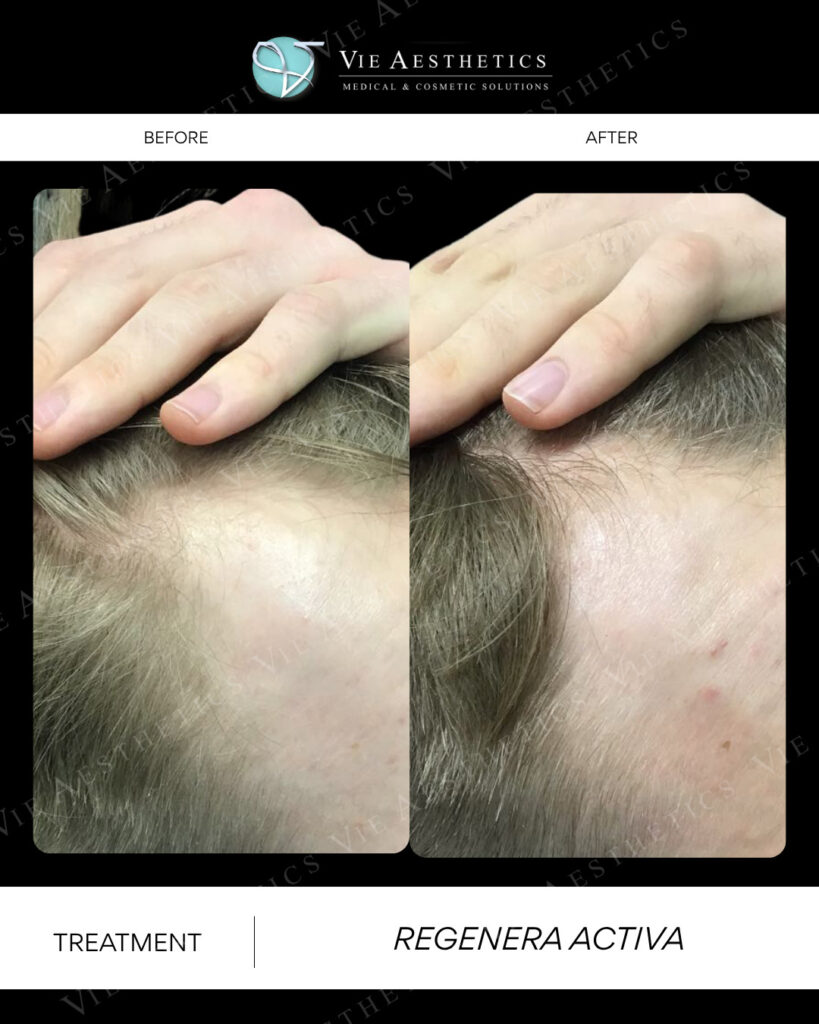
Regenera Activa is one of the most advanced regenerative treatments available for early-stage hair loss. It uses your own tissue, taken from a healthy area of the scalp, to stimulate weakened follicles and improve hair quality.
This treatment is particularly effective for early recession around the temples, where follicles are still active but beginning to weaken. In many cases, a single session is enough to trigger noticeable improvement over time.
Hair thinning at the hairline?
Restore density with regenerative hair treatments.
PRP works by using your own blood to deliver concentrated growth factors directly into the scalp. These growth factors support the natural hair cycle, helping follicles stay in their active growth phase for longer.
Over a course of treatments, many patients notice improvements in hair thickness and overall quality, particularly when PRP is combined with other therapies.
3. Polynucleotides for hair restoration
Polynucleotides are a regenerative treatment designed to improve the condition of the scalp and support cellular repair. Rather than forcing rapid change, they work gradually to create a healthier environment for hair growth.
This makes them a suitable option for patients looking for subtle, long-term improvement in hair quality.
4. Medical-grade topical treatments
Topical treatments can play an important role in slowing hair loss progression. These are typically prescribed as part of a wider plan and work best when used consistently over time.
They are rarely used alone but can significantly enhance the results of in-clinic treatments.
5. Combination treatment plans
In many cases, the most effective results come from combining treatments rather than relying on a single approach.
Hair loss is complex and rarely caused by one factor alone. Genetics, hormones, lifestyle, and overall health all play a role, which is why a personalised approach is essential for achieving consistent results.
At Vie Aesthetics, we enhance this process using the DNA TrichoTest. This is a genetic test designed to analyse how your body responds to different hair loss treatments, helping us understand what is most likely to work for you.
The test uses a simple saliva swab and lifestyle questionnaire to assess your genetic profile, including how your body responds to key treatment pathways such as DHT blocking, circulation, inflammation, and nutrient support.
From this data, we are able to create a personalised treatment plan tailored to your specific hair loss pattern and biology. Rather than relying on trial and error, this approach allows us to select treatments that are more suited to your individual response.
Your plan may include regenerative treatments such as Regenera Activa or PRP, supported by targeted topical or medical therapies based on your TrichoTest results. This ensures a more precise, structured approach to managing hair loss over time.
If this sounds like you
If you are noticing your hairline gradually moving back, especially at the temples, this is often one of the earliest signs of pattern hair loss.
If your hair feels thinner, weaker, or slower to grow, your follicles may still be active but need targeted stimulation.
Many people are unsure whether their hair loss is reversible, which is why a professional assessment is key to understanding what stage you are at and what can realistically be achieved.
Which treatment is right for you?
The right treatment depends on:
How long you have been experiencing hair loss
The extent of recession
Your overall scalp health
Your long-term goals
Some patients respond well to a single regenerative treatment, while others benefit from a structured plan over several months.
There is no one-size-fits-all approach, which is why a personalised assessment is essential.
At Vie Aesthetics, your treatment is always personalised
At Vie Aesthetics, we take a medical and regenerative approach to hair restoration.
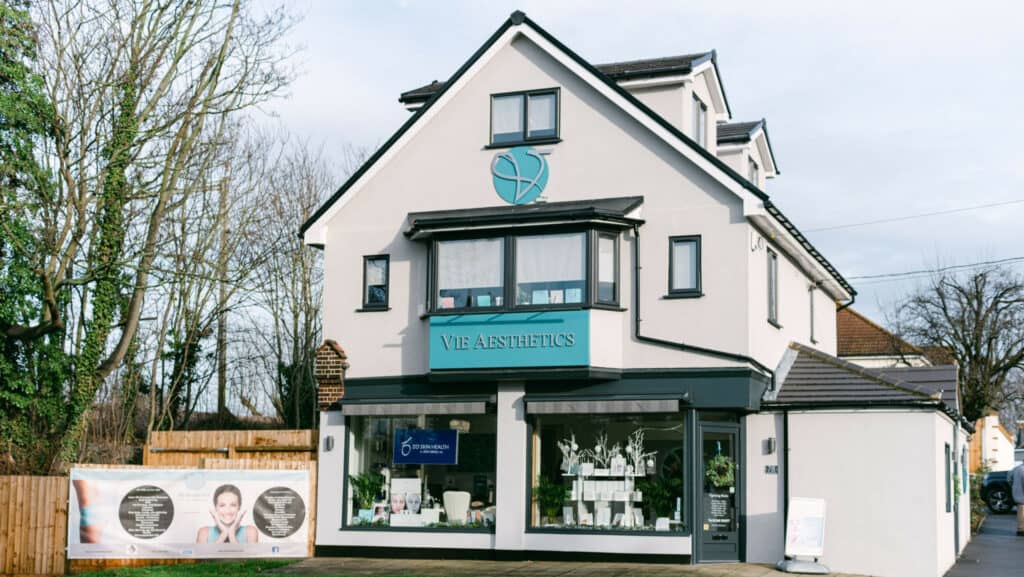
As a doctor-led, CQC regulated clinic, all treatments are carried out by experienced professionals who assess your hair loss in detail before recommending a plan.
We focus on:
Early intervention
Natural-looking improvement
Long-term scalp health
Our aim is to stabilise hair loss while improving density in a way that feels subtle and realistic.
What is the best treatment for a receding hairline in the UK?
The best treatment depends on the stage of hair loss. Early cases often respond well to regenerative treatments such as Regenera Activa or PRP.
Can a receding hairline grow back?
In early stages, hair can often be strengthened and partially restored. In later stages, treatments focus on slowing progression and improving density.
How quickly do results appear?
Most treatments take a few months to show visible improvement, as hair growth follows a natural cycle.
Are these treatments permanent?
Results can be long-lasting, but maintenance may be needed depending on the treatment and individual factors.
Is treatment painful?
Most treatments involve minimal discomfort and require little to no downtime.
Final thoughts
A receding hairline does not have to be something you simply accept. With the right treatment plan, it is often possible to slow progression and improve hair density in a natural and subtle way.
The most important step is acting early and choosing treatments that are clinically guided and tailored to you.