
Download our brochure Download our app
0 Items £0.00
Book Consultation
profhilo rayleigh

Blog

CO2 Laser Resurfacing: Why Expertise Matters

17-11-2026 | Posted in: Blogs, Face Treatments

The Laser Is Only Half the Story: Why Expertise Shapes Your CO2 Result

Author: Vicky Grammatikopoulou, BHons, MA, PGCE — Founder and CEO, Vie Aesthetics; Medical reviewer: Dr Ioannis Liakas, FRCP, BCAM, MSc — Medical Director, Vie Aesthetics

A client said something to me recently that I keep coming back to. “I’ve seen the same laser advertised everywhere,” she said, “so surely it doesn’t matter where I go?”

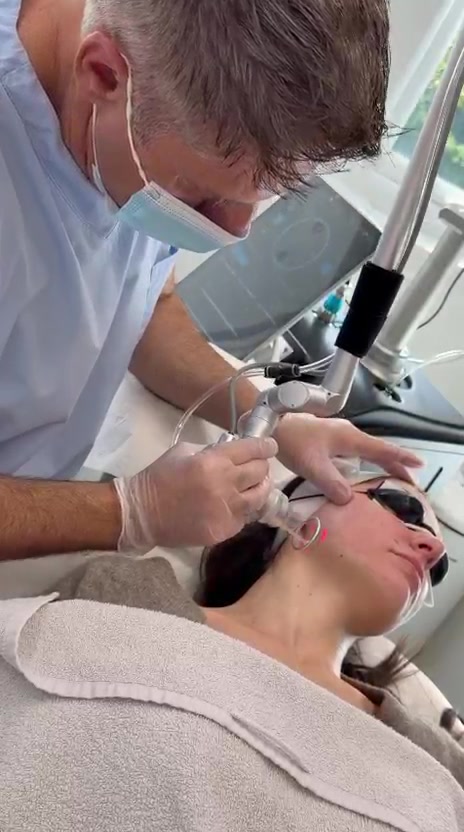
It’s a fair question. And it’s exactly the right one to ask, because the answer is the reason we built Vie Aesthetics the way we did. Two clinics can own the same CO2 laser and produce completely different results. The machine sets what is possible. The person holding the handpiece decides what actually happens to your skin. After more than 14 years in this industry, I can tell you that the gap between a good result and a great one is almost never the technology. It’s the thinking behind it.

So let me walk you through what that thinking looks like, so you can make an informed choice wherever you decide to be treated.
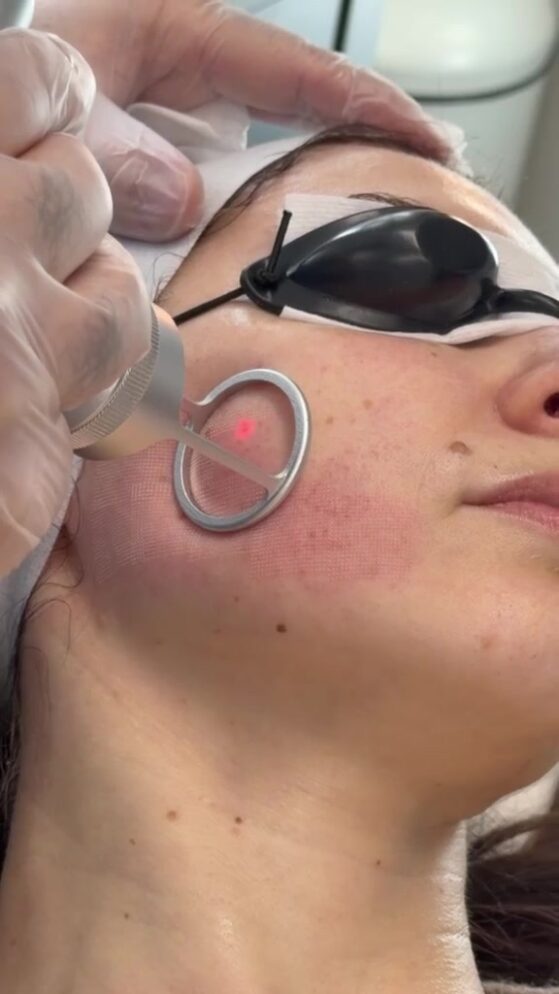
Key Takeaways

  • CO2 laser resurfacing works by delivering controlled energy into the skin to trigger repair and new collagen. How much, how deep and where is a clinical decision, not a preset.
  • Your skin type, pigment history, recent sun exposure and healing capacity should shape your plan before any laser is switched on.
  • Different areas of your face need different settings. One setting for the whole face is a warning sign.
  • More passes and higher energy don’t automatically mean better results. Knowing when to stop protects your skin.
  • Combining CO2 with other treatments can be powerful, but only with the right sequencing and enough healing time in between.

First, what does a CO2 laser actually do?

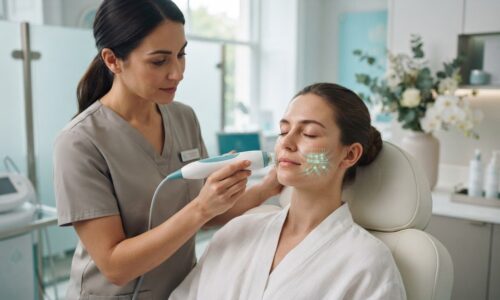
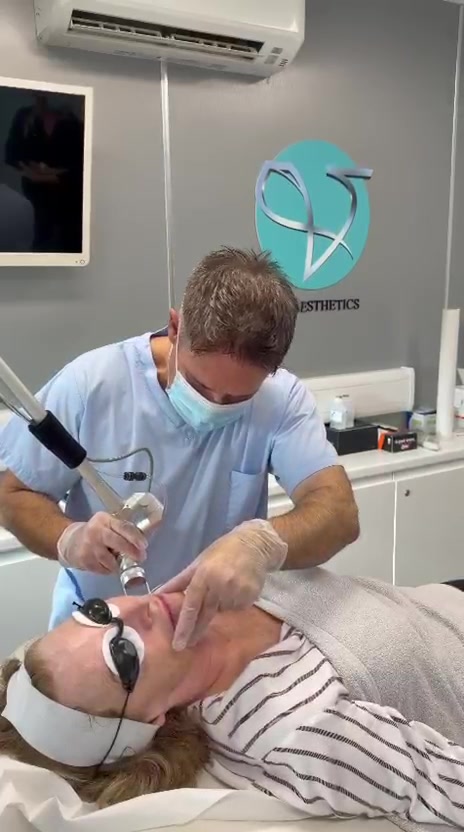
A CO2 laser emits light at a wavelength that is strongly absorbed by the water in your skin. In its fractional form, it creates thousands of tiny, precise columns of treated tissue, leaving healthy skin in between. Your body then does the clever part: it repairs those micro-zones, replacing tired, sun-damaged tissue and stimulating fresh collagen.

That’s why CO2 is so well regarded for texture, fine lines, acne scarring, sun damage and crepey skin. It is also why it demands respect. You are asking your skin to heal, and every decision about energy and depth affects how it heals.

1. Choosing the right depth for the job

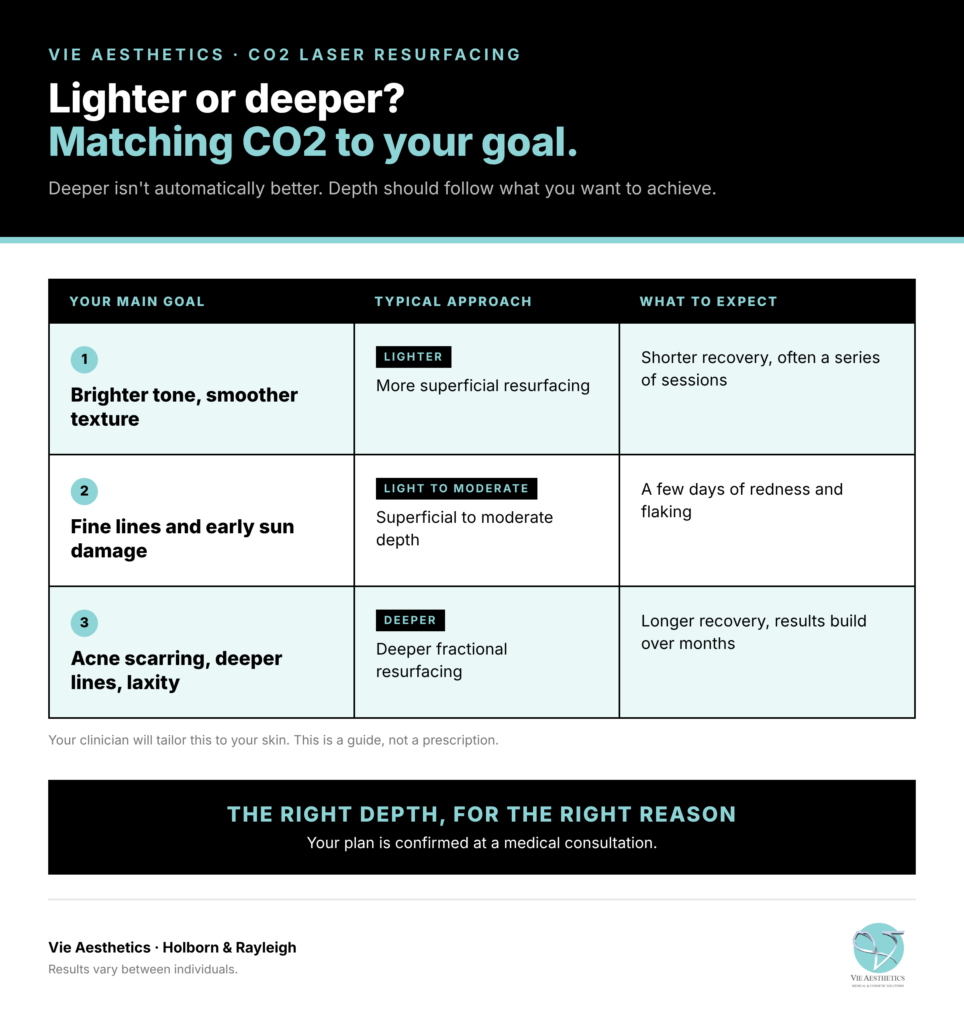
It’s tempting to believe that deeper must be better. It isn’t. Depth should match the concern.

If you want to soften surface texture, brighten tone or refine early sun damage, a more superficial treatment targets the upper layers of the skin with a shorter recovery. If your goal is firmer skin, deeper lines or acne scarring, your clinician may work deeper, into the dermis, where collagen remodelling happens. That brings more downtime and needs more care.

2. Starting with you, not the laser

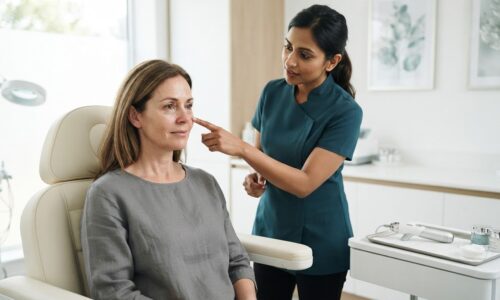
The right laser treatment starts with the right patient assessment. Before we discuss settings, we want to understand your skin: your skin type, whether you’ve had pigmentation or melasma, recent holidays or sun exposure, how your skin has healed in the past, your medical history and, crucially, what you want to achieve.

This matters because skin with more natural pigment, or a history of melasma, can react to heat with darker patches known as post-inflammatory hyperpigmentation. That doesn’t automatically rule you out, but it does call for a more conservative, carefully staged plan and sometimes skin preparation beforehand. Recent sun exposure may simply mean we wait. Waiting a few weeks is always better than months of correcting pigment.

3. Treating your face as many zones, not one

Your face is not one surface. The skin around your eyes is thin and delicate. Your forehead tends to be thicker. Around the mouth, the skin moves constantly. Your cheeks and jawline behave differently again.

A thoughtful practitioner adapts as they move across your face, adjusting energy and density zone by zone. Applying one setting from forehead to jawline is like using one pressure for every brushstroke on a painting. It might cover the canvas, but it won’t give you a beautiful result.

4. Knowing when to stop

This is the part I’m most passionate about, because it’s where real experience shows. During a CO2 treatment, a skilled clinician is watching your skin respond in real time: the colour, the level of redness, the way the tissue reacts. There is a point where the skin has had exactly what it needs. Going beyond that point doesn’t give you more results. It gives you more risk: prolonged redness, delayed healing and pigment changes.

At Vie, we would always rather take a measured approach and build results over a series than push one session too far. Protecting your skin is part of the result.

5. Combining wisely, not excessively

CO2 works beautifully alongside other treatments. At Vie, it can form part of our Vielift Plus package with Endolift® and thread lifting, and it pairs well with polynucleotides to support skin quality.

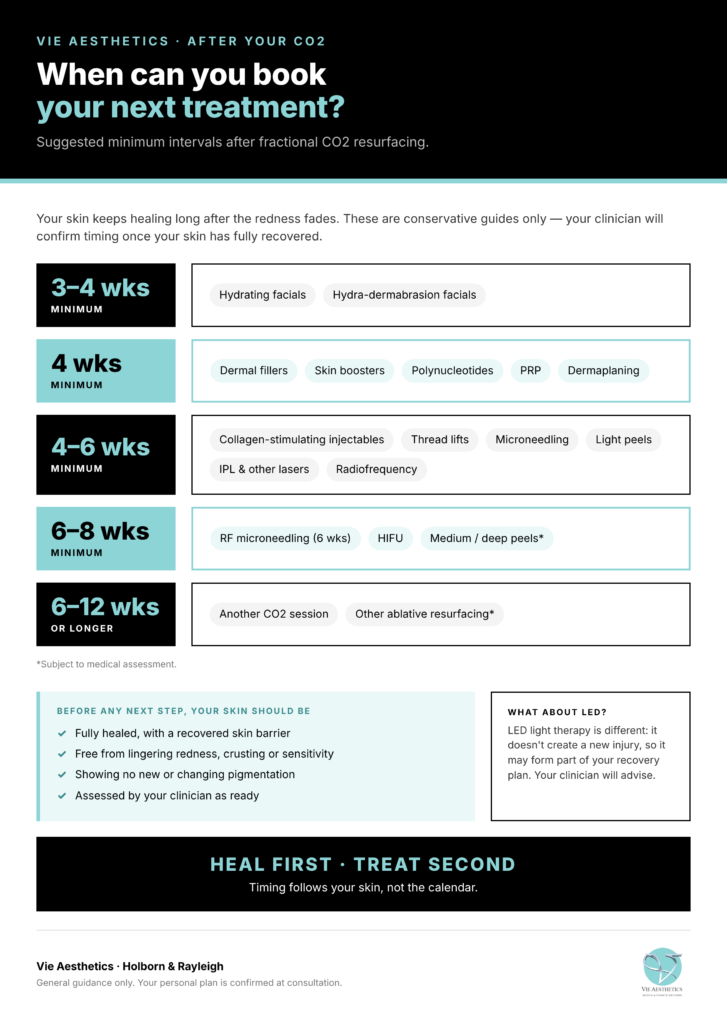
But here’s the honest truth: more treatments in a short window can add up. Every procedure asks your skin to recover, and that burden is cumulative. Smart combination is about sequencing, choosing the right order and allowing proper healing between steps. Our guiding principle is simple: heal first, treat second.

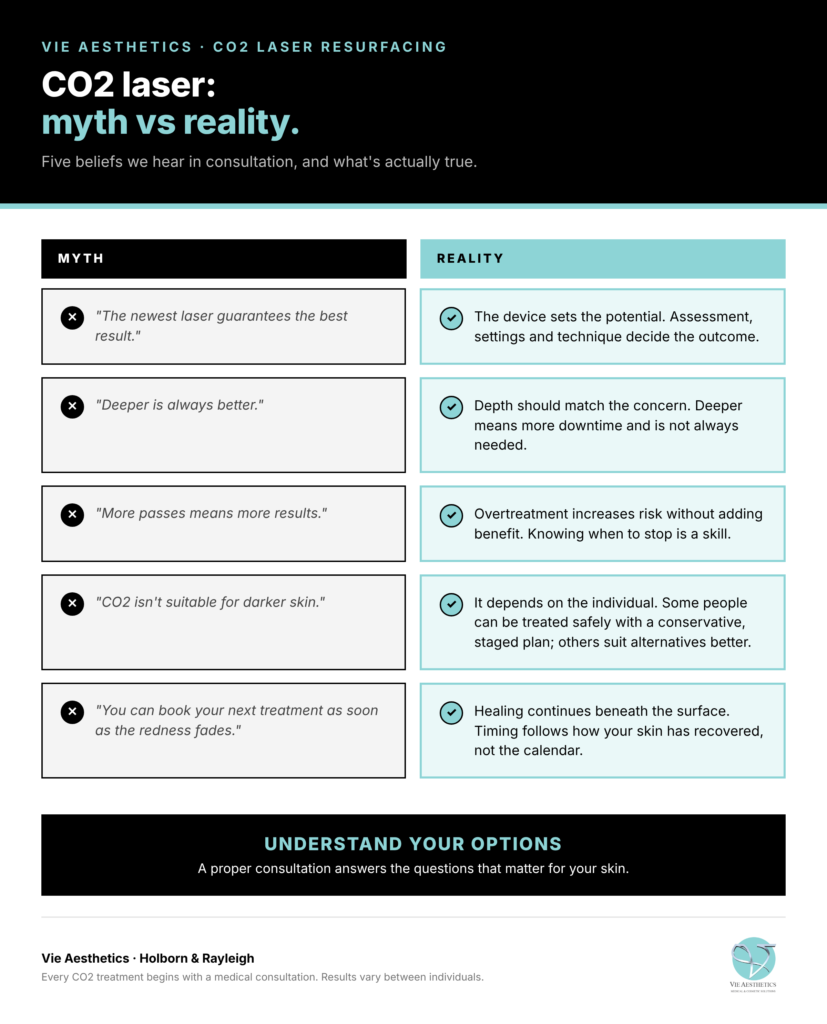
CO2: Myth vs Reality

A word from our Medical Director

“A CO2 laser is a precise instrument, but it doesn’t make decisions. The decisions — who to treat, how deep to go, where to adjust and when to stop — come from clinical training and experience. That is what protects the patient and what creates results that look natural.” Dr Ioannis Liakas, Medical Director at Vie Aesthetics

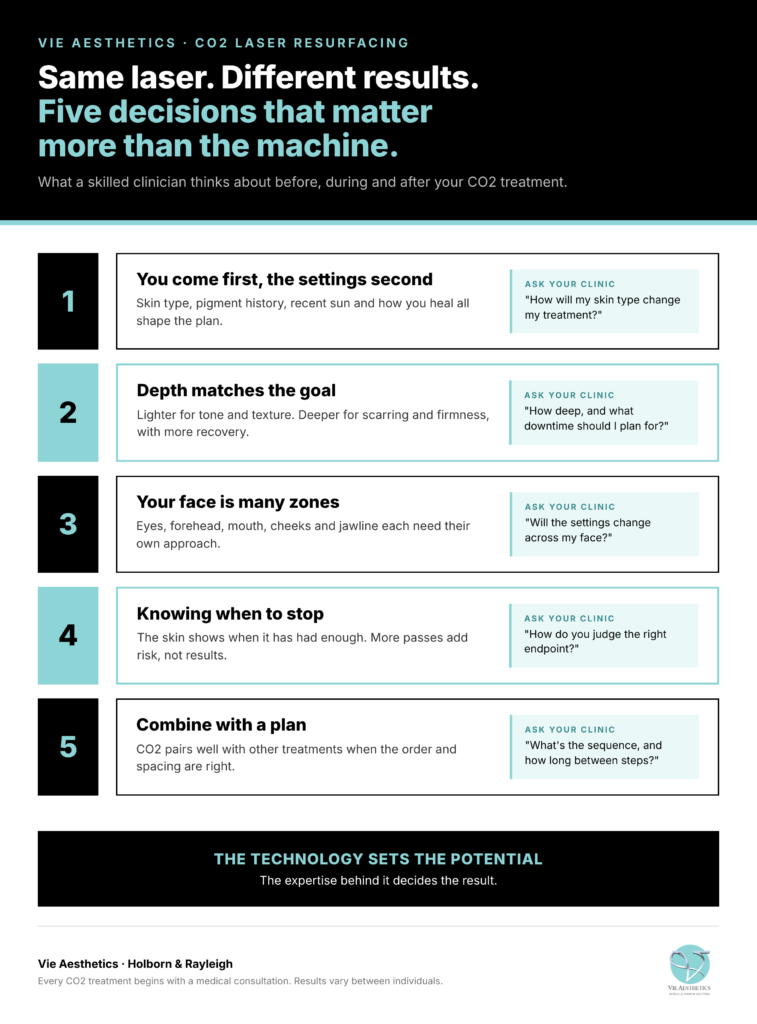
Five Decisions that matter more than the machine

Why we do things differently at Vie

When we introduced CO2 resurfacing across both our clinics in Holborn and Rayleigh, we didn’t see it as adding another machine. We saw it as adding another responsibility.

Every CO2 treatment at Vie is planned under the medical leadership of Dr Ioannis Liakas, with a full consultation first. We take time to explain what CO2 can do for your skin, what it can’t, how long recovery is likely to take, and whether another treatment might suit you better. Sometimes the best advice is “not yet” or “not this one”. I’d rather you leave a consultation better informed than leave with a booking you’re unsure about.

That’s what education and empowerment mean to us. You deserve to understand your own skin.

Frequently Asked Questions

How long is the downtime after CO2 laser resurfacing? It depends on depth and intensity. Lighter treatments may mean a few days of redness and flaking. Deeper resurfacing can take one to two weeks for the surface to settle, with pinkness that fades gradually. We’ll give you a personal estimate at your consultation.

When will I see results? You’ll usually notice smoother, brighter skin once the initial healing settles. Collagen continues to remodel for several months, so results tend to keep improving.

How many sessions will I need? Some concerns respond to a single session; others, such as acne scarring, often benefit from a series. Your plan will be built around your goals and how your skin responds.

Is CO2 suitable for all skin types? Not always in the same way. Skin type, pigment history and healing capacity all influence suitability and settings. A medical consultation is the safest way to find out.

Can I combine CO2 with other treatments? Yes, with the right timing. CO2 can be part of our Vielift Plus package or combined with polynucleotides. As a general guide, most injectables and other energy-based treatments are spaced several weeks after CO2, always once your skin has fully healed.
Where can I have CO2 laser at Vie Aesthetics? CO2 resurfacing is available at both our Holborn (London) and Rayleigh (Essex) clinics.
Ready to explore CO2 for your skin?

Ready to explore CO2 for your skin?

If you’re curious whether CO2 resurfacing is right for you, the best first step is a conversation. Book a consultation at our Holborn or Rayleigh clinic, ask us anything, and leave with a plan that makes sense for your skin.

Book your consultation

Results vary from person to person. All treatments at Vie Aesthetics are preceded by a consultation to confirm suitability.

Back to our blogs
Have any questions?
Submit Enquiry
Vie Aesthetics Clinics
Holborn

95 Gray’s Inn Rd,
Holborn,
London,
WC1X 8TX

Tel: 020 3343 8500


///simply.void.saying

Rayleigh

78 London Hill Road,
Rayleigh,
Essex,
SS6 7HP

///stores.weds.joke

Accreditations

CO2 Laser Resurfacing: Why Expertise Matters