Article by
Vicky Grammatikopoulou, BHons, MA, PGCE
Vicky Grammatikopoulou is the founder and CEO of Vie Aesthetics, a multi-award winning UK-based aesthetics business built on a philosophy of safety, excellence, education, innovation, and empowerment.
If you searched for “questions to ask aesthetics consultation”, you’re likely looking for clear answers before making a commitment. This guide will help you prepare for a useful conversation and understand what to ask before agreeing to treatment.
Ask how each option relates to your goals, whether you’re a suitable candidate, and what risks, recovery and aftercare to consider. It’s also reasonable to discuss realistic outcomes, total costs and whether you can take time to decide.
What if the most valuable outcome of an aesthetics consultation is deciding to wait? At Vie Aesthetics, procedures are performed only by doctors and qualified medical practitioners, and treatment plans are personalised. The questions ahead can help you explore your options, understand what a proposed treatment involves and make a considered decision without pressure.
The most useful questions to ask at an aesthetics consultation help the practitioner understand what you hope to achieve before discussing procedures. Start by describing your goals, then ask which options may suit your circumstances and why. A consultation should be a conversation, not a commitment to treatment.
Describe what you’ve noticed in neutral, specific terms. For example, you might say, “I’d like to understand the changes I’ve noticed in my skin,” or explain that your priority is a natural-looking result. You don’t need clinical language or a perfect description. The practitioner can ask follow-up questions to understand what matters most to you.
Share relevant treatment history, skincare use and health information honestly, including anything you think could affect your options. This helps the practitioner consider your circumstances when discussing suitability. At Vie Aesthetics, procedures are performed only by doctors and qualified medical practitioners, and treatment plans are personalised.
Your preferences should guide the discussion, not a trend, someone else’s results or pressure to choose a particular procedure. If you’re new to the subject, this overview of aesthetic medicine introduces the field and the range of medical specialties involved.
Ask the practitioner to connect each suggestion to the goal you’ve described. These questions can help you understand their reasoning and keep the conversation focused on your needs:
Choosing no treatment can be a reasonable outcome. A recommendation should take your individual circumstances and preferences into account, rather than assume that a procedure is the right next step. For a broader overview of options, read the guide to non-surgical aesthetic treatments.
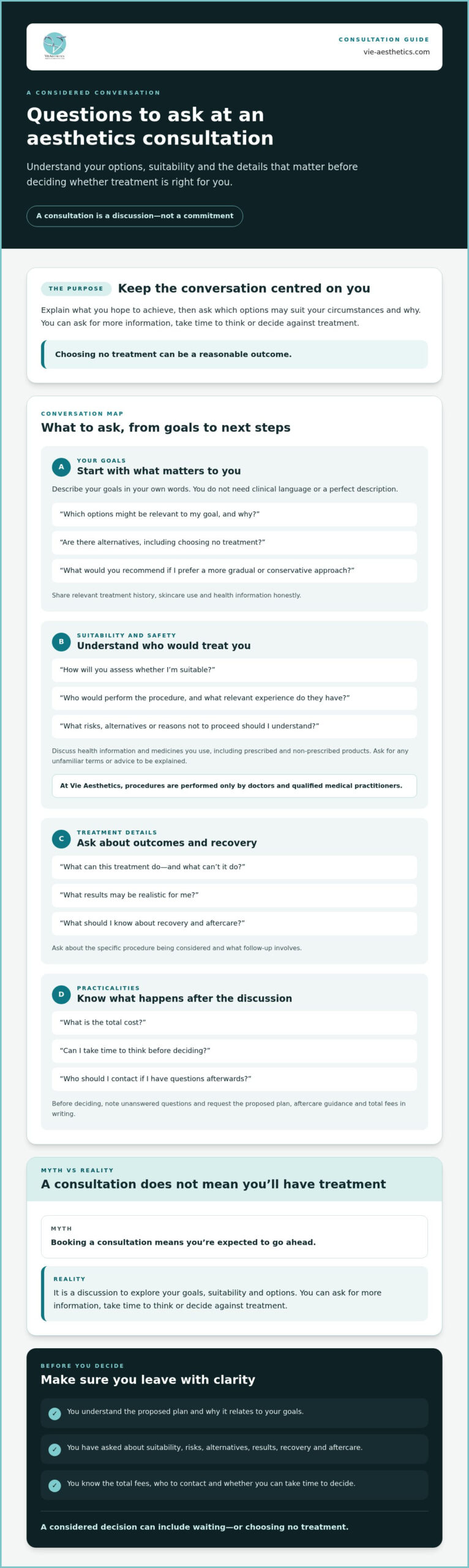
Confirm who would perform the procedure and ask about their relevant qualifications and experience. Then discuss whether the treatment suits you, its risks and alternatives, and what aftercare and follow-up involve. At Vie Aesthetics, procedures are performed only by doctors and qualified medical practitioners.
Ask who would carry out the procedure, what experience they have with it and who you should contact if questions arise afterwards. Clarify how follow-up is arranged so you know what support to expect. You can learn more about the people behind the clinic on the Vie Aesthetics medical team page.
Ask the practitioner to explain the risks relevant to your circumstances, possible alternatives and why a treatment might not be suitable. Share health information and details of medicines you use, including prescribed and non-prescribed products, so these can be considered when discussing your options.
Ask for an explanation of any terms or advice you’re unsure about, and check what to do if you have questions after treatment. The discussion should cover information relevant to the specific procedure being considered, rather than relying on general guidance that may not apply to you.
Myth: Booking a consultation means you’re expected to go ahead. Reality: It’s a discussion to explore your goals, suitability and options. You can ask for more information, take time to think or decide against treatment. Neither a particular procedure nor a specific result should be treated as a foregone conclusion.
If you’d like to discuss your goals and explore suitable options, you can arrange an aesthetics consultation.
Ask what change a treatment is intended to address, what it may not address and what you can realistically expect. Useful questions to ask during an aesthetics consultation include when changes might become noticeable, how long results may last for you, and what recovery and aftercare could involve. Your practitioner should discuss these points in relation to the specific option being considered.
What it will do: the practitioner can explain the intended effect of the proposed treatment and how it relates to your stated goal. What it won’t do: it shouldn’t be presented as a promise of a particular result or as a way to address concerns outside its intended purpose.
Treatment results vary between individuals.
Ask what factors could affect your outcome, when you might notice changes and how long they may last. These details depend on the treatment and your circumstances, so avoid relying on broad claims or someone else’s experience as a forecast for you.
Ask what recovery may involve, whether temporary effects are possible and what care instructions you’ll need to follow. If work, exercise or usual activities matter to your plans, ask whether you may need to make adjustments and for how long. Request clear aftercare guidance before deciding.
| Discuss | Ask your practitioner |
|---|---|
| Treatment effect | What change is intended, and what are its limits? |
| Recovery | What temporary effects or activity adjustments should I plan for? |
| Aftercare | What instructions should I follow, and who can answer follow-up questions? |
You don’t need to decide during your appointment. Take time to review the options, check what remains unclear and consider whether the proposed plan fits your goals, circumstances and budget.
A helpful consultation addresses your individual goals and gives you space to ask questions. You should understand the options discussed, their limitations, relevant risks, aftercare and total fees. If an explanation feels unclear, ask for it in plain language or request more time to consider it.
Ask for the proposed plan and total fees in writing. This gives you specific details to review and makes it easier to identify anything you want clarified.
Use this checklist after your appointment. Note what was recommended and whether you still need answers.
If you feel ready, confirm the plan, who would perform the procedure, the aftercare arrangements and any outstanding details. If you’re unsure, it’s reasonable to pause. Vie Aesthetics creates personalised treatment plans, and results vary between individuals.
The most useful questions to ask at an aesthetics consultation help you connect a treatment to your goals, understand its risks and limits, and clarify recovery and aftercare. Ask for a written outline of the proposed plan and total fees, then take time to consider your options before deciding.
At Vie Aesthetics, procedures are performed only by doctors and qualified medical practitioners. Treatment plans are personalised, and results vary between individuals, so a consultation is an opportunity to discuss what may be suitable for you, not a promise of a particular outcome.
You’re entitled to ask for clearer explanations if anything feels uncertain. A considered decision starts with understanding your choices and feeling comfortable with the information you’ve been given.
Take your questions with you, trust your own pace and choose the next step that feels right for you.
Ask which options may suit your goal, why they’re being considered and whether choosing no treatment is reasonable. Questions to ask at an aesthetics consultation should also cover suitability, relevant risks, expected recovery, aftercare and total fees. Ask what a treatment is intended to do and what it may not address. Request a written outline if you’d like time to review the plan after your appointment.
Yes. Ask who would perform the procedure, what relevant qualifications and experience they have, and who you can contact with questions afterwards. Vie Aesthetics procedures are performed only by doctors and qualified medical practitioners. It’s reasonable to ask for a clear explanation of the practitioner’s role and experience with the specific treatment you’re discussing, rather than relying on general statements about a clinic or its team.
Yes. A consultation is a chance to discuss your goals, options and suitability, not an obligation to proceed. You can ask for more information, take time to consider the proposed plan or decide that treatment isn’t right for you. If you’re unsure, note what needs clarification and ask for the plan and any costs in writing before making a decision.
Ask what change the treatment aims to achieve, what it cannot address, when you may notice changes and how long results may last in your individual case. Treatment results vary between individuals, so another person’s experience can’t predict yours. Ask the practitioner to explain what they consider realistic for your circumstances and whether there are factors that could affect the outcome.
The cost depends on the consultation and any treatment being considered, so ask the clinic directly for current fees rather than relying on a general estimate. Before agreeing to a plan, request the consultation fee, the total treatment cost in pounds sterling (£) and a breakdown of any stages or follow-up charges. You can take time to review the figures before deciding whether to proceed.
Bring a note of your goals and questions, plus details of relevant treatment history, skincare products and medicines you use. Be ready to share health information that may help the practitioner discuss suitability. If you have a written treatment plan or product details from previous care, these may help provide context. You don’t need specialist terminology; clear, honest information is most useful.