
By Dr Ioannis Liakas, Medical Director
Hyaluronic acid lip filler results typically last between 6 and 18 months, though lip movement can affect how quickly filler breaks down. How long results last varies from person to person, so it helps to understand what may influence them before considering treatment.
It’s natural to want a clear picture of what happens during lip filler treatment and as your lips settle. This guide explains how long results may last, how injection methods work, and what preparation and aftercare can involve.
You’ll also learn what to consider when choosing a practitioner, so you can take informed questions to a consultation and better understand your options.
Before booking, discuss your goals, health and potential risks with the practitioner. Plan how you’ll attend a follow-up and manage recovery at home.
Before treatment, share relevant health information and ask about numbing cream, possible side effects and aftercare. Aspirin, ibuprofen, vitamin E and fish oil may increase bruising. Discuss these medicines or supplements with your practitioner, and don’t stop prescribed medication without advice from the clinician who manages it. This preparation helps the practitioner tailor the appointment to your circumstances.
Choose a clinic you can reasonably reach if you need a review or support after treatment, and understand how to contact the treating practitioner if concerns arise. A check-up two weeks after treatment lets the practitioner assess how your lips have settled and discuss asymmetry or other questions. Keep your aftercare instructions accessible at home.
Age restrictions determine who can legally receive treatment in England. According to the UK legislation register, it is illegal in England to give lip filler to anyone under 18 under the Botulinum Toxin and Cosmetic Fillers (Children) Act 2021. Discuss your goals and health during consultation before treatment is booked. These conversations help establish whether treatment is appropriate for you.
For the first few days after lip filler, avoid touching, massaging or pressing firmly on your lips unless instructed otherwise. Swelling, bruising and tenderness can occur; swelling often settles within 3-7 days. Follow the clinic’s aftercare advice, and promptly report concerns about a side effect to the treating practitioner. How you care for your lips during recovery can support a clear assessment of the settled result.
Suitability depends on your goals, health and the risks discussed at consultation. Lip filler adds volume without surgery; implants add a device, while a lip lift is a surgical procedure that changes lip position.
Hyaluronic acid lip filler typically lasts between 6 and 18 months. This gel adds volume and helps define the lips. Because lips move during speaking, eating and facial expressions, filler may break down faster here than in less mobile areas. The lifespan of lip filler varies between patients, so one person’s result won’t predict another’s.
As the gel gradually breaks down, the added volume becomes less noticeable. A subtle change may fade differently from a fuller result. Repeat treatment may be considered 6-24 months after the initial appointment. This range isn’t a set schedule: the amount used and how quickly your body breaks down the filler influence when you might consider another treatment.
Hyaluronidase is an enzyme that can dissolve hyaluronic acid filler. A trained practitioner may use it if you want the filler reduced or removed. This can provide an option for reversing lip filler, although the right approach depends on why you want it dissolved and an assessment of your lips.
If you’re considering dissolving previous lip filler, share the product details with the practitioner. Knowing which material was injected helps inform the discussion, since hyaluronidase acts on hyaluronic acid filler. The practitioner can assess whether dissolving is appropriate or whether waiting is more suitable. They can also discuss whether your concern relates to volume, shape or asymmetry, helping you understand the options before deciding what to do next.
Knowing which product was used can add useful context when discussing how long results may last. Restylane and Juvéderm are two commonly used hyaluronic acid-based filler brands for lips in the UK. Sharing your treatment records with the practitioner can make that discussion more specific.
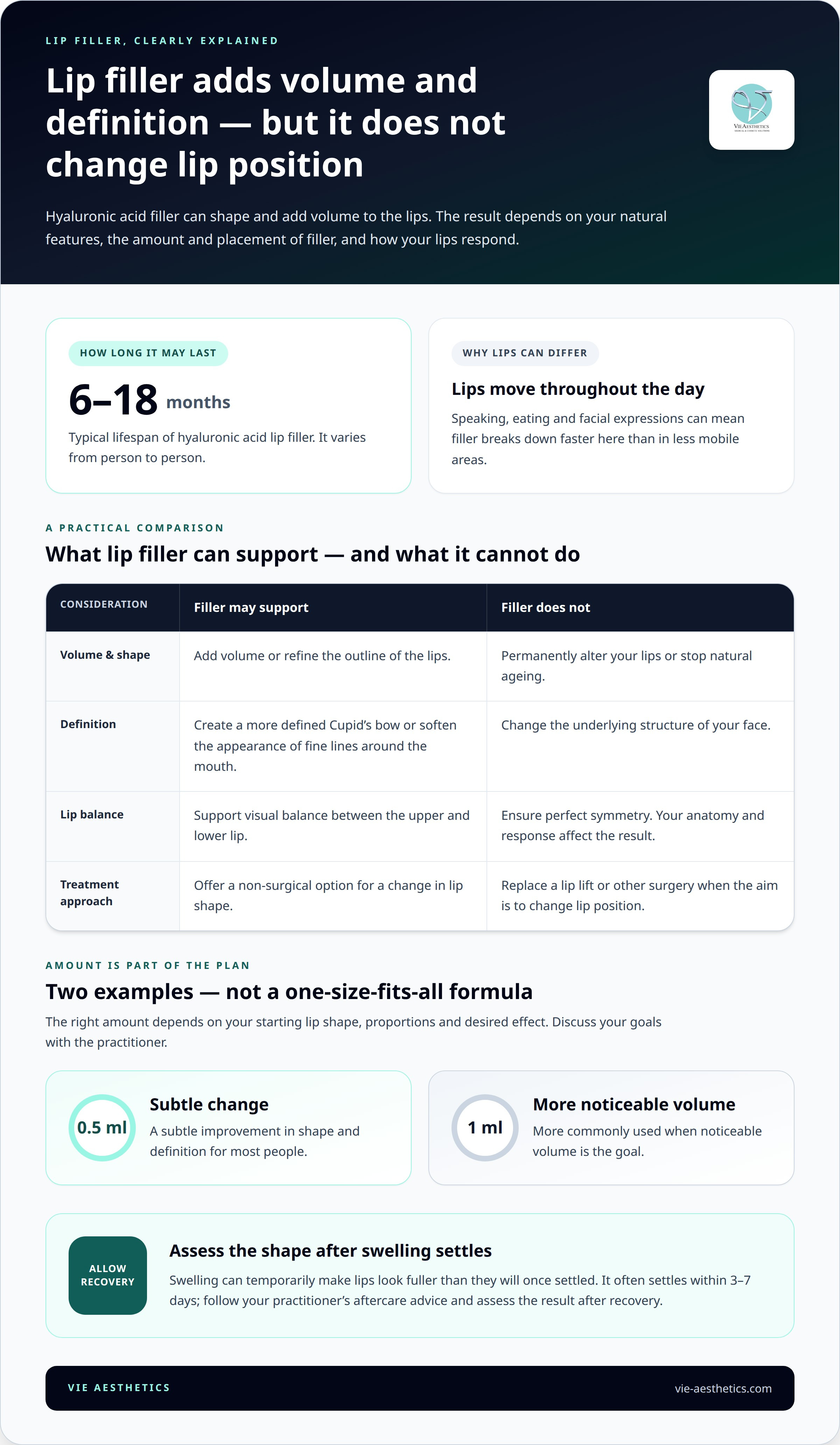
Hyaluronic acid filler adds volume to the lips and can refine their outline. It can create a more defined Cupid’s bow, improve balance between the upper and lower lip, or soften the appearance of fine lines around the mouth. The aim is to work with your natural features, not create a standard shape. Because the lips frame the teeth and lower face, aesthetic dental practices such as Butterfly Dental Care similarly emphasise how restorative treatments and oral alignment contribute to overall facial harmony.
The amount used influences the degree of change. A 0.5 ml treatment produces a subtle improvement in shape and definition for most people. A 1 ml treatment is more commonly used when noticeable volume is the goal. These are examples, not a formula: the starting lip shape, proportions and desired effect all matter when discussing an approach.
It can:
It won’t:
Filler doesn’t work like a muscle-relaxing treatment: it adds volume rather than reducing muscle movement. The result depends on your anatomy, the amount and placement of product, and how your lips respond. Swelling can temporarily make the lips look fuller than they will once settled, so assess the shape after recovery rather than immediately after injection. A considered plan prioritises proportion and your goals over simply adding more volume.
Myth: Filler always creates an exaggerated look.
Reality: The result depends on the amount used, placement and natural lip shape. A carefully planned treatment can focus on definition or balance rather than pronounced volume. The consultation should clarify your preferred look before treatment begins.
Myth: Swelling shows the finished result.
Reality: Swelling can make lips appear fuller at first. It commonly peaks during the first 1-2 days and usually settles within a week. Bruising or tenderness may also affect how the lips look during recovery. Allow time for these temporary effects to ease before judging the settled shape.
Myth: All fillers are the same.
Reality: More than 60 dermal filler brands are available in the UK. Products can differ in formulation and intended use, so the brand and product matter. A practitioner should explain which filler they plan to use and why it suits your aims. The label alone doesn’t determine the final appearance; placement and treatment planning matter too.
Myth: Adding more filler always improves the outcome.
Reality: More volume can change the balance between your lips and surrounding features. The appropriate amount depends on your starting shape and the effect you want. A measured approach prioritises proportion, with a review of the result before considering further treatment.
Myth: Filler permanently changes your lips.
Reality: Hyaluronic acid filler gradually breaks down, so its effect changes over time. Results don’t fade at the same pace for everyone. Understanding the product, treatment plan and recovery helps set realistic expectations and supports an informed decision.
A suitable practitioner should discuss your goals, health and potential risks before treatment is booked. They should explain which filler brand they use, how they plan to place it and what follow-up involves. Clear answers help you understand the proposed approach, rather than choosing based only on a photograph or a promised look.
Ask how the practitioner assesses facial proportions and lip movement. A careful plan considers your starting shape, desired volume and the balance between your lips and other features. The product should be identified by brand, and you should understand what it contains. Some hyaluronic acid fillers contain 0.3% lidocaine, a local anaesthetic that can reduce discomfort.
The amount is another point to discuss. Most first-time patients start with 0.5 ml to 1 ml, but the right choice depends on their goals and anatomy:
These amounts describe product volume, not a guaranteed visual outcome. A practitioner should explain why a proposed amount suits your lips and whether a staged approach makes sense. Consider how they discuss swelling, tenderness, asymmetry and what happens if you have concerns. Hyaluronidase, an enzyme that can dissolve hyaluronic acid filler, may be part of a discussion about managing an unwanted result. Ask how the clinic handles urgent concerns, too. Vascular occlusion is a rare but serious complication that can block blood flow and needs immediate medical attention. A considered consultation gives you space to weigh the benefits, limits and risks before deciding.
A consultation comes before treatment. The practitioner discusses your goals, health, previous procedures and potential risks. They assess your natural lip shape and agree which areas to treat. This planning matters because injection points and product placement influence definition, volume and balance. You can also discuss numbing cream and the sensations to expect.
The appointment commonly takes around 15 to 45 minutes. After cleansing the area, the practitioner may apply numbing cream. They then inject hyaluronic acid gel into selected areas, using a method suited to your anatomy and agreed result. Small, carefully placed amounts allow the practitioner to shape the lips gradually during treatment. The injection plan should be tailored, not copied from another person’s photograph.
Needle placement and the amount used affect how the gel supports the lip border or body. A trained practitioner understands facial anatomy and adjusts placement to your features. Ask them to explain their approach in plain language, including why they recommend particular injection points. The explanation should connect the technique to your goals, not rely on technical terms alone.
Swelling, bruising and tenderness can follow injections. Swelling often peaks during the first 1-2 days and usually settles within a week, so early fullness isn’t the final appearance. Aftercare includes avoiding firm pressure or massage unless instructed, and following the clinic’s specific advice. Avoid strenuous exercise and alcohol for at least 24 hours after treatment.
The key takeaway is that injection method isn’t a one-size-fits-all choice. Consultation, facial assessment, product placement and aftercare form one treatment plan. A qualified practitioner should explain each stage before proceeding and provide clear recovery instructions. This gives you a practical basis for understanding what will happen and how to care for your lips afterwards.
Vie Aesthetics offers fillers for people considering a carefully planned change to lip shape, definition or volume. The doctor-led, multi-award-winning, CQC-registered clinic offers no-obligation consultations, giving you space to discuss your goals, health and questions before deciding whether treatment feels right for you. The conversation can clarify what filler may achieve and where its limits lie.
Your natural features and preferred outcome shape the treatment discussion. A practitioner can explain the proposed approach, product and placement in clear terms, then discuss aftercare. If you’ve had filler before, sharing those details can make the conversation more relevant to your circumstances.
Some aesthetic goals may call for a different treatment. Vie Aesthetics also offers Endolift Laser Treatment, Aqualyx Fat Dissolving Injections and Soft Surgery (Plexr). These address different concerns and aren’t substitutes for fillers. A consultation can help clarify which option relates to your goals, without assuming every concern needs treatment.
If you’re still weighing up whether treatment suits you, take time to consider your preferences and questions. There’s no pressure to proceed after a consultation.
Lip fillers are injectable gels used to add volume or definition to the lips. Hyaluronic acid, a substance found naturally in the body, is commonly used because it attracts water and adds structure where it is placed. For example, a practitioner may treat the lip border to enhance definition or add volume within the lips. The product and placement should reflect your facial proportions and the change you want.
Common temporary side effects include swelling, bruising and tenderness around injection sites. Small lumps can also occur and may need assessment, massage or dissolving by a practitioner. A rare but serious complication, vascular occlusion, occurs when filler blocks blood flow and requires immediate medical attention. Know how to reach the treating clinic after your appointment, and seek urgent medical help if you develop concerning symptoms rather than waiting for routine follow-up.
Some change in shape is visible straight after treatment, but the first appearance isn’t the settled result. Swelling can make lips look fuller temporarily, while bruising may affect their colour or outline. Swelling commonly settles within 3-7 days, and the final shape typically shows at around 2 weeks. If you’re comparing photographs, use similar lighting and wait until recovery has progressed before judging the difference.
Hyaluronic acid fillers can be dissolved using hyaluronidase, an enzyme that breaks down hyaluronic acid. This may be considered if you want the filler reduced or removed, but it requires assessment by a trained practitioner. First, establish which product was injected, since hyaluronidase does not dissolve every type of filler. Discuss why you want it reversed and the appropriate plan during a clinical assessment.
All prices are subject to change! No-obligation consultations are offered for all treatments. The final cost depends on the treatment selected, so use the clinic’s current pricing information when planning your appointment.
The amount depends on your starting lip shape, facial proportions and the change you want. A 0.5 ml treatment can create a subtle improvement in definition, while 1 ml is more commonly used for noticeable volume. These amounts are not a prescription: a practitioner should assess your features and discuss the intended result before selecting a volume. For a first treatment, a measured plan can help keep the change aligned with your preferences.
By Dr Ioannis Liakas, Medical Director
Hyaluronic acid lip filler results typically last between 6 and 18 months, though lip movement can affect how quickly filler breaks down. How long results last varies from person to person, so it helps to understand what may influence them before considering treatment.
It’s natural to want a clear picture of what happens during lip filler treatment and as your lips settle. This guide explains how long results may last, how injection methods work, and what preparation and aftercare can involve.
You’ll also learn what to consider when choosing a practitioner, so you can take informed questions to a consultation and better understand your options.
Before booking, discuss your goals, health and potential risks with the practitioner. Plan how you’ll attend a follow-up and manage recovery at home.
Before treatment, share relevant health information and ask about numbing cream, possible side effects and aftercare. Aspirin, ibuprofen, vitamin E and fish oil may increase bruising. Discuss these medicines or supplements with your practitioner, and don’t stop prescribed medication without advice from the clinician who manages it. This preparation helps the practitioner tailor the appointment to your circumstances.
Choose a clinic you can reasonably reach if you need a review or support after treatment, and understand how to contact the treating practitioner if concerns arise. A check-up two weeks after treatment lets the practitioner assess how your lips have settled and discuss asymmetry or other questions. Keep your aftercare instructions accessible at home.
Age restrictions determine who can legally receive treatment in England. According to the UK legislation register, it is illegal in England to give lip filler to anyone under 18 under the Botulinum Toxin and Cosmetic Fillers (Children) Act 2021. Discuss your goals and health during consultation before treatment is booked. These conversations help establish whether treatment is appropriate for you.
For the first few days after lip filler, avoid touching, massaging or pressing firmly on your lips unless instructed otherwise. Swelling, bruising and tenderness can occur; swelling often settles within 3-7 days. Follow the clinic’s aftercare advice, and promptly report concerns about a side effect to the treating practitioner. How you care for your lips during recovery can support a clear assessment of the settled result.
Suitability depends on your goals, health and the risks discussed at consultation. Lip filler adds volume without surgery; implants add a device, while a lip lift is a surgical procedure that changes lip position.
Hyaluronic acid lip filler typically lasts between 6 and 18 months. This gel adds volume and helps define the lips. Because lips move during speaking, eating and facial expressions, filler may break down faster here than in less mobile areas. The lifespan of lip filler varies between patients, so one person’s result won’t predict another’s.
As the gel gradually breaks down, the added volume becomes less noticeable. A subtle change may fade differently from a fuller result. Repeat treatment may be considered 6-24 months after the initial appointment. This range isn’t a set schedule: the amount used and how quickly your body breaks down the filler influence when you might consider another treatment.
Hyaluronidase is an enzyme that can dissolve hyaluronic acid filler. A trained practitioner may use it if you want the filler reduced or removed. This can provide an option for reversing lip filler, although the right approach depends on why you want it dissolved and an assessment of your lips.
If you’re considering dissolving previous lip filler, share the product details with the practitioner. Knowing which material was injected helps inform the discussion, since hyaluronidase acts on hyaluronic acid filler. The practitioner can assess whether dissolving is appropriate or whether waiting is more suitable. They can also discuss whether your concern relates to volume, shape or asymmetry, helping you understand the options before deciding what to do next.
Knowing which product was used can add useful context when discussing how long results may last. Restylane and Juvéderm are two commonly used hyaluronic acid-based filler brands for lips in the UK. Sharing your treatment records with the practitioner can make that discussion more specific.
Hyaluronic acid filler adds volume to the lips and can refine their outline. It can create a more defined Cupid’s bow, improve balance between the upper and lower lip, or soften the appearance of fine lines around the mouth. The aim is to work with your natural features, not create a standard shape.
The amount used influences the degree of change. A 0.5 ml treatment produces a subtle improvement in shape and definition for most people. A 1 ml treatment is more commonly used when noticeable volume is the goal. These are examples, not a formula: the starting lip shape, proportions and desired effect all matter when discussing an approach.
It can:
It won’t:
Filler doesn’t work like a muscle-relaxing treatment: it adds volume rather than reducing muscle movement. The result depends on your anatomy, the amount and placement of product, and how your lips respond. Swelling can temporarily make the lips look fuller than they will once settled, so assess the shape after recovery rather than immediately after injection. A considered plan prioritises proportion and your goals over simply adding more volume.
Myth: Filler always creates an exaggerated look.
Reality: The result depends on the amount used, placement and natural lip shape. A carefully planned treatment can focus on definition or balance rather than pronounced volume. The consultation should clarify your preferred look before treatment begins.
Myth: Swelling shows the finished result.
Reality: Swelling can make lips appear fuller at first. It commonly peaks during the first 1-2 days and usually settles within a week. Bruising or tenderness may also affect how the lips look during recovery. Allow time for these temporary effects to ease before judging the settled shape.
Myth: All fillers are the same.
Reality: More than 60 dermal filler brands are available in the UK. Products can differ in formulation and intended use, so the brand and product matter. A practitioner should explain which filler they plan to use and why it suits your aims. The label alone doesn’t determine the final appearance; placement and treatment planning matter too.
Myth: Adding more filler always improves the outcome.
Reality: More volume can change the balance between your lips and surrounding features. The appropriate amount depends on your starting shape and the effect you want. A measured approach prioritises proportion, with a review of the result before considering further treatment.
Myth: Filler permanently changes your lips.
Reality: Hyaluronic acid filler gradually breaks down, so its effect changes over time. Results don’t fade at the same pace for everyone. Understanding the product, treatment plan and recovery helps set realistic expectations and supports an informed decision.
A suitable practitioner should discuss your goals, health and potential risks before treatment is booked. They should explain which filler brand they use, how they plan to place it and what follow-up involves. Clear answers help you understand the proposed approach, rather than choosing based only on a photograph or a promised look.
Ask how the practitioner assesses facial proportions and lip movement. A careful plan considers your starting shape, desired volume and the balance between your lips and other features. The product should be identified by brand, and you should understand what it contains. Some hyaluronic acid fillers contain 0.3% lidocaine, a local anaesthetic that can reduce discomfort.
The amount is another point to discuss. Most first-time patients start with 0.5 ml to 1 ml, but the right choice depends on their goals and anatomy:
These amounts describe product volume, not a guaranteed visual outcome. A practitioner should explain why a proposed amount suits your lips and whether a staged approach makes sense. Consider how they discuss swelling, tenderness, asymmetry and what happens if you have concerns. Hyaluronidase, an enzyme that can dissolve hyaluronic acid filler, may be part of a discussion about managing an unwanted result. Ask how the clinic handles urgent concerns, too. Vascular occlusion is a rare but serious complication that can block blood flow and needs immediate medical attention. A considered consultation gives you space to weigh the benefits, limits and risks before deciding.
A consultation comes before treatment. The practitioner discusses your goals, health, previous procedures and potential risks. They assess your natural lip shape and agree which areas to treat. This planning matters because injection points and product placement influence definition, volume and balance. You can also discuss numbing cream and the sensations to expect.
The appointment commonly takes around 15 to 45 minutes. After cleansing the area, the practitioner may apply numbing cream. They then inject hyaluronic acid gel into selected areas, using a method suited to your anatomy and agreed result. Small, carefully placed amounts allow the practitioner to shape the lips gradually during treatment. The injection plan should be tailored, not copied from another person’s photograph.
Needle placement and the amount used affect how the gel supports the lip border or body. A trained practitioner understands facial anatomy and adjusts placement to your features. Ask them to explain their approach in plain language, including why they recommend particular injection points. The explanation should connect the technique to your goals, not rely on technical terms alone.
Swelling, bruising and tenderness can follow injections. Swelling often peaks during the first 1-2 days and usually settles within a week, so early fullness isn’t the final appearance. Aftercare includes avoiding firm pressure or massage unless instructed, and following the clinic’s specific advice. Avoid strenuous exercise and alcohol for at least 24 hours after treatment.
The key takeaway is that injection method isn’t a one-size-fits-all choice. Consultation, facial assessment, product placement and aftercare form one treatment plan. A qualified practitioner should explain each stage before proceeding and provide clear recovery instructions. This gives you a practical basis for understanding what will happen and how to care for your lips afterwards.
Vie Aesthetics offers fillers for people considering a carefully planned change to lip shape, definition or volume. The doctor-led, multi-award-winning, CQC-registered clinic offers no-obligation consultations, giving you space to discuss your goals, health and questions before deciding whether treatment feels right for you. The conversation can clarify what filler may achieve and where its limits lie.
Your natural features and preferred outcome shape the treatment discussion. A practitioner can explain the proposed approach, product and placement in clear terms, then discuss aftercare. If you’ve had filler before, sharing those details can make the conversation more relevant to your circumstances.
Some aesthetic goals may call for a different treatment. Vie Aesthetics also offers Endolift Laser Treatment, Aqualyx Fat Dissolving Injections and Soft Surgery (Plexr). These address different concerns and aren’t substitutes for fillers. A consultation can help clarify which option relates to your goals, without assuming every concern needs treatment.
If you’re still weighing up whether treatment suits you, take time to consider your preferences and questions. There’s no pressure to proceed after a consultation.
Lip fillers are injectable gels used to add volume or definition to the lips. Hyaluronic acid, a substance found naturally in the body, is commonly used because it attracts water and adds structure where it is placed. For example, a practitioner may treat the lip border to enhance definition or add volume within the lips. The product and placement should reflect your facial proportions and the change you want.
Common temporary side effects include swelling, bruising and tenderness around injection sites. Small lumps can also occur and may need assessment, massage or dissolving by a practitioner. A rare but serious complication, vascular occlusion, occurs when filler blocks blood flow and requires immediate medical attention. Know how to reach the treating clinic after your appointment, and seek urgent medical help if you develop concerning symptoms rather than waiting for routine follow-up.
Some change in shape is visible straight after treatment, but the first appearance isn’t the settled result. Swelling can make lips look fuller temporarily, while bruising may affect their colour or outline. Swelling commonly settles within 3-7 days, and the final shape typically shows at around 2 weeks. If you’re comparing photographs, use similar lighting and wait until recovery has progressed before judging the difference.
Hyaluronic acid fillers can be dissolved using hyaluronidase, an enzyme that breaks down hyaluronic acid. This may be considered if you want the filler reduced or removed, but it requires assessment by a trained practitioner. First, establish which product was injected, since hyaluronidase does not dissolve every type of filler. Discuss why you want it reversed and the appropriate plan during a clinical assessment.
All prices are subject to change! No-obligation consultations are offered for all treatments. The final cost depends on the treatment selected, so use the clinic’s current pricing information when planning your appointment.
The amount depends on your starting lip shape, facial proportions and the change you want. A 0.5 ml treatment can create a subtle improvement in definition, while 1 ml is more commonly used for noticeable volume. These amounts are not a prescription: a practitioner should assess your features and discuss the intended result before selecting a volume. For a first treatment, a measured plan can help keep the change aligned with your preferences.